
AI Societal Implementation Whitepaper
AI Societal Implementation Whitepaper
In 2026, generative AI has moved beyond a mere productivity tool to become an existence that redefines the corporate OS — and, by extension, the social infrastructure itself.
Sample pages
Click to enlarge
Recommended for
Executives evaluating AI adoption
AI activation and program leads
Project managers engaged in societal implementation
Overview
As generative AI spreads rapidly, how should Japanese enterprises ride the wave? AI Societal Implementation Whitepaper vol.1, published by enableX, Inc., places personalization and multimodal AI at the center and paints a multidimensional picture of a future in which AI and human intelligence converge — a practical report grounded in execution.
This whitepaper comprises six chapters. Chapter 1 quantitatively analyzes the impact of generative AI on Japan's labor market and provides a broad view of policy and guideline trends domestically and abroad. According to the Statistics Bureau of Japan, the country has approximately 67.51 million workers, and many of these digital workers are expected to be affected by generative AI. However, individual use of generative AI stands at only 26.7% in Japan, falling significantly behind the United States at 68.8% and China at 81.2%. The whitepaper argues that the key to breaking this stagnation lies in execution capability that reconciles individual augmentation with the capitalization of organizational knowledge.
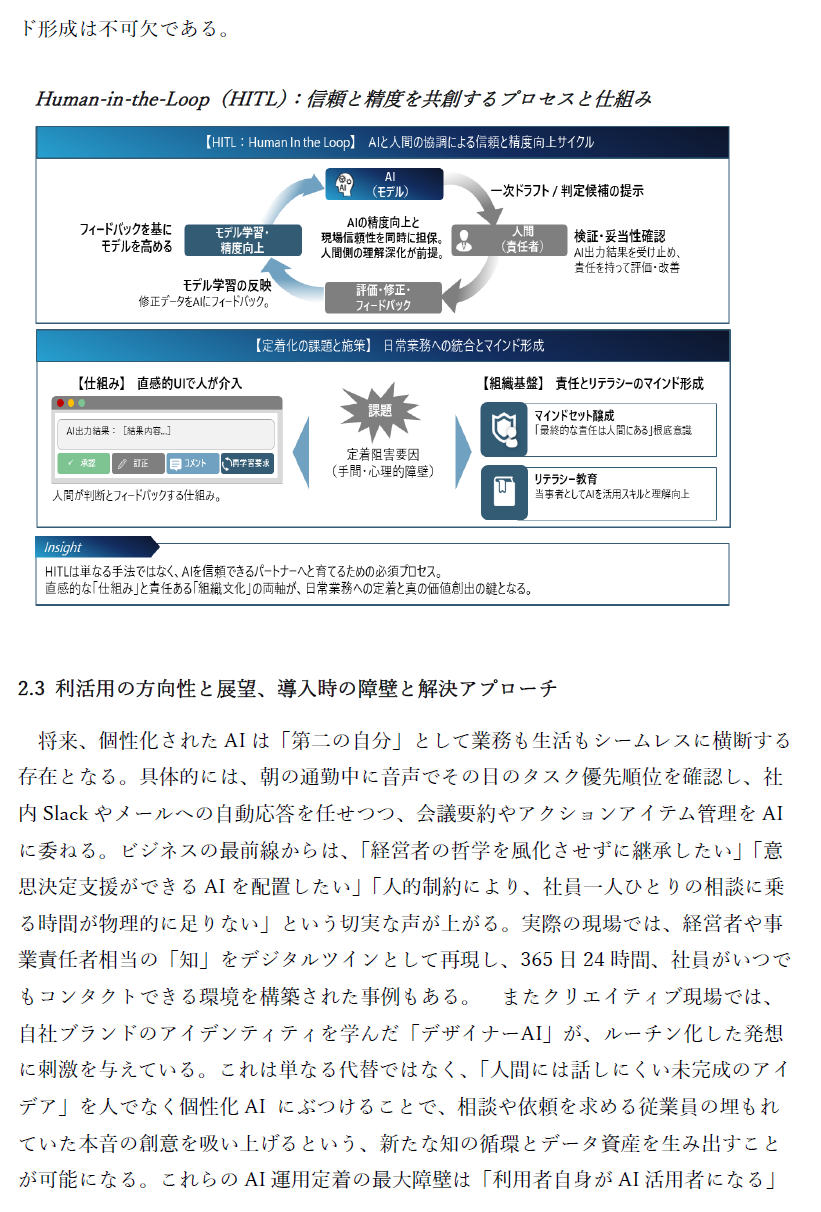
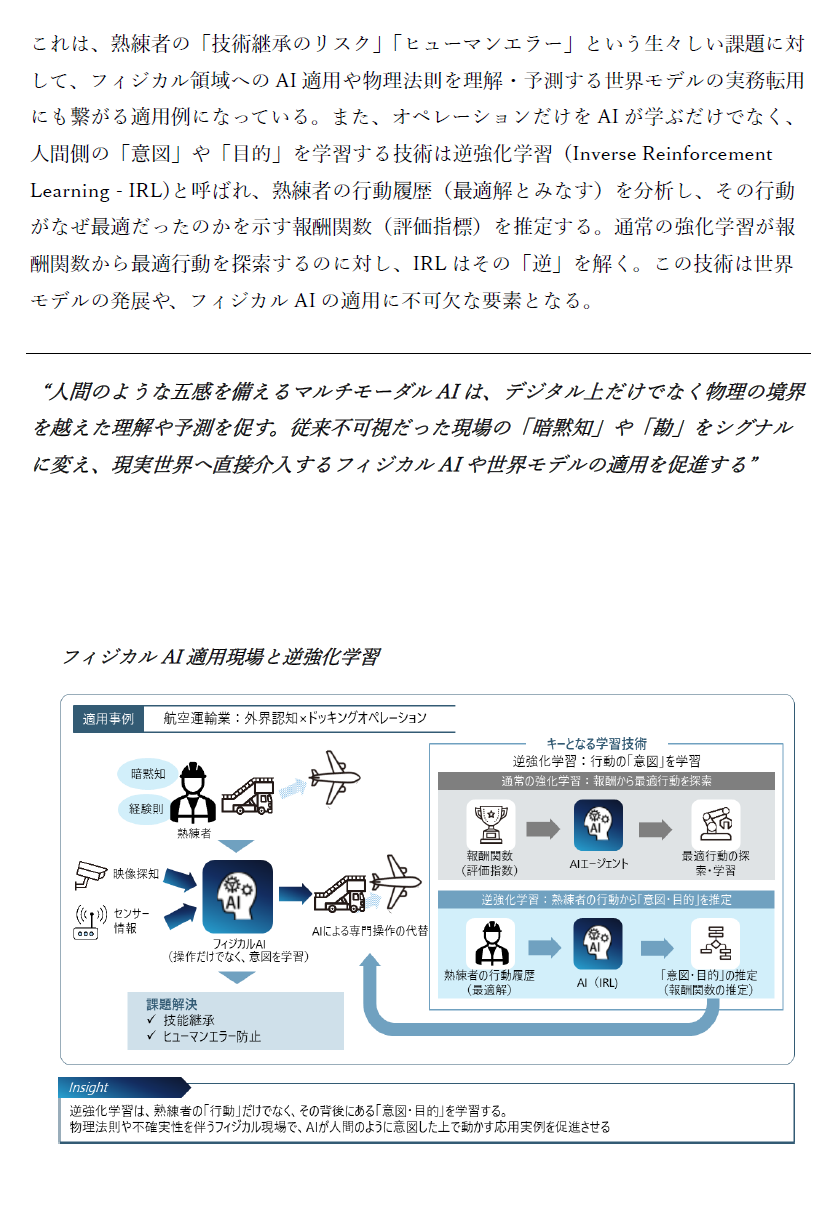
Chapters 2 and 3 examine personalization and multimodal AI in depth as core technologies. Personalization has evolved into a technology that learns an individual's work history, preferences, and tacit knowledge to produce an AI agent functioning as a second self. A future is becoming reality in which an executive's philosophy is carried forward without fading, and the thinking of every employee is converted into an organizational asset. Multimodal AI integrates text, image, audio, and sensor information to deliver judgment approaching human five-sense perception. The chapter offers abundant implementation examples that span the boundary between digital and physical, including the transfer of tacit knowledge on the manufacturing floor and the quantification of customer psychology.
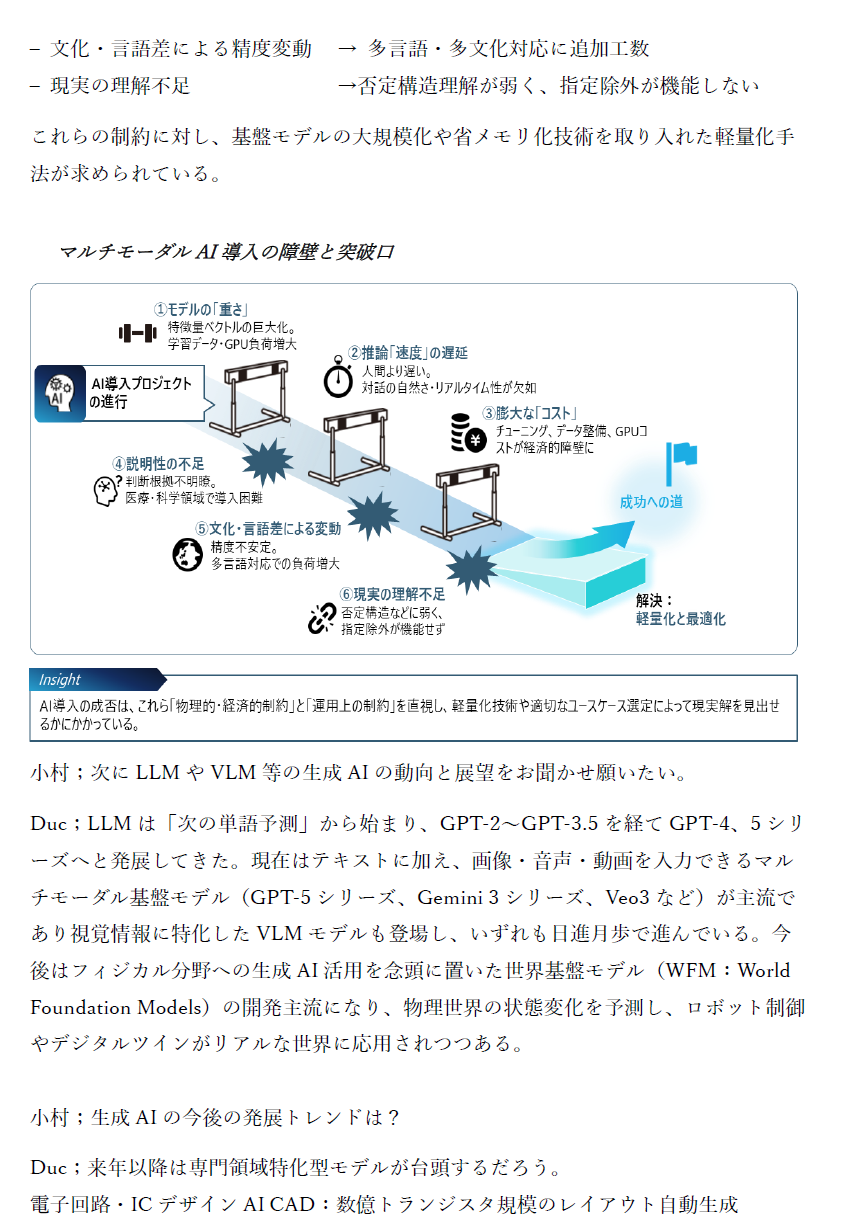
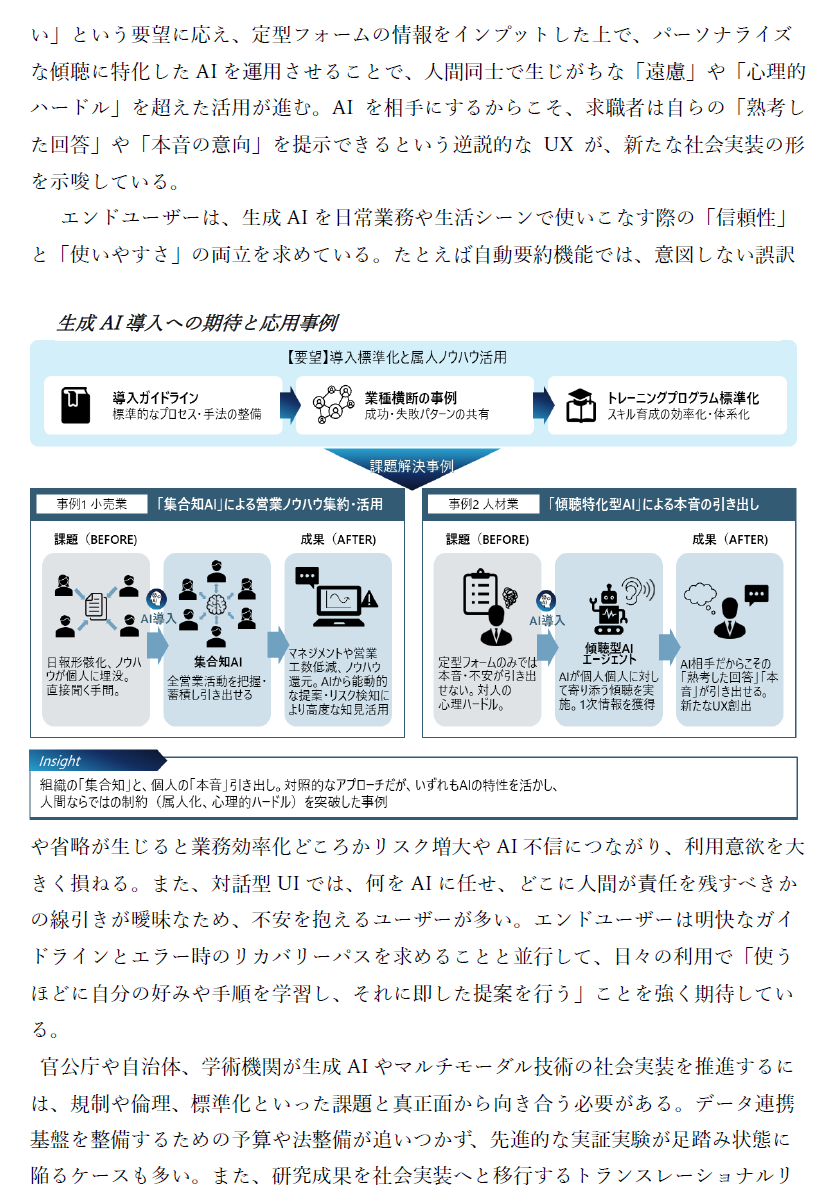
Chapter 4 captures the voices from the field — AI researchers, implementers, and end users — through interviews. Real challenges come into sharp relief: the gap between theory and implementation, the difficulty of making ROI visible, and cultural and linguistic barriers. The perspectives rooted in field experience are one of the major reading rewards of this whitepaper.
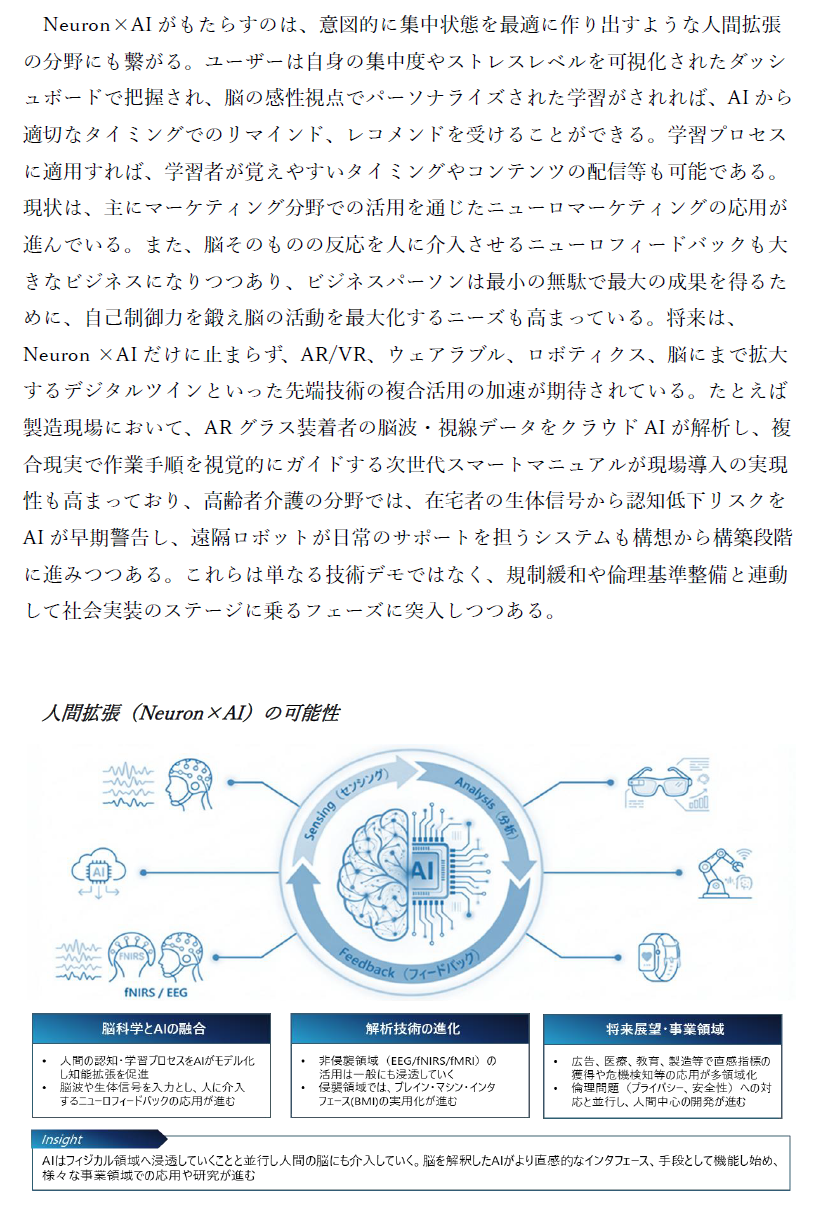
Chapter 5 steps into the convergence of neuroscience and AI (Neuron × AI), discussing the potential of Neurotech to capture human emotion, attention, and memory consolidation by analyzing biosignals such as brain waves in real time. It points to possibilities for human augmentation that emerge as collaboration between AI and humans deepens further. The closing chapter presents a clear time-axis perspective on the future, from the short-term phase of trial and error, through the rise of physical AI in the mid term, to long-term convergence with every emerging technology.
Whether enterprises consume generative AI as an outsider's black box or implement it as organizational firepower — that difference is now beginning to determine competitive strength. This whitepaper is a concentrated guide to the essence of the technology and the principles of societal implementation, addressed to business leaders standing on the front line of transformation. We invite you to read it.

More from this author



Inquire about AI implementation
enableX professionals will propose the optimal solution tailored to your business challenges.