Nyle Inc.'s Integrated Business Strategy and Growth Model
Nyle operates two businesses: the "Horizontal DX Business," which delivers DX support and marketing, and the "Automotive Industry DX Business," which runs the car-leasing business "Carmokun." At first glance the two appear to span different fields, but Nyle has built a distinctive growth model by organically interweaving them. In this article, we explore how Nyle integrates the two businesses and opens up new markets by drawing on the strengths of each.


New Value Creation Through the "Horizontal DX Business" and the "Automotive Industry DX Business"
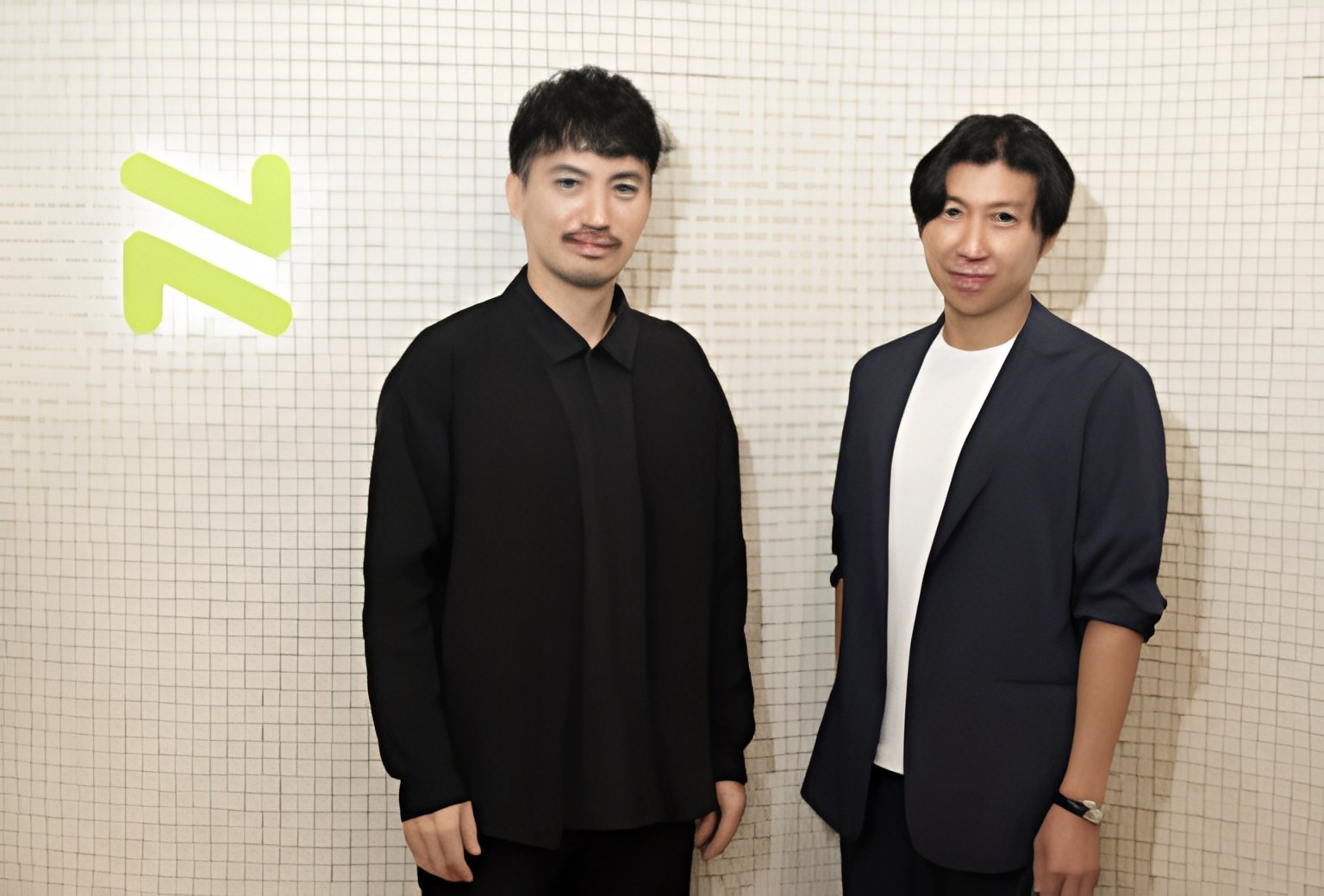
Nyle Inc., Representative Director and President Hisho Takahashi
Nyle operates two businesses: the "Horizontal DX Business," which delivers DX support and marketing, and the "Automotive Industry DX Business," which runs the car-leasing business "Carmokun."
At first glance the two appear to span different fields, but Nyle has built a distinctive growth model by organically interweaving them.
The know-how in digital marketing and data utilization cultivated in the Horizontal DX Business underpins the expansion of the Automotive Industry DX Business, while market insight gained through the car-leasing business sharpens the precision of the DX business — a virtuous cycle.
On top of that, M&A strategy and business development are opening up new market opportunities and accelerating the growth of both businesses.
In this article, we explore how Nyle integrates these two businesses and opens up new markets by drawing on the strengths of each.

Mr. Hisho Takahashi, Representative Director and President, Nyle Inc.
Characteristics of Operating the Businesses and the Strategy for Partner Collaboration
— In running both the "Horizontal DX Business" — which provides DX and marketing — and the "Automotive Industry DX Business," which provides the car-leasing service "Carmokun," what do you see as the major differences between the two?
I see the major operating difference as the fact that the Automotive Industry DX Business goes deeper into the market — from the standpoint of how thoroughly the product is built out — than the Horizontal DX Business.
The consulting business in the Horizontal DX Business is one where we advise on, and contribute to, clients' marketing and DX challenges. The client base is limited (in the hundreds), so the priority is how well we can deliver something fit for each client.
By contrast, Carmokun sees several hundred ready-to-buy customers per month, and in terms of leads, several thousand per month.
Because the absolute number of people who want to own a car is large, customer needs are more diverse. We have to decide where to start in building the product, which customer targets to address, and what benefits to deliver to each.
— I see. The customer profile being different changes how the product is built out.
Yes. The automotive industry also has many constraints and regulations, so adding new content to the established operations of partner car-leasing companies and loan providers is quite difficult.
When we build a product, we cannot move forward without thinking through the target, the product to offer, and the merits we can present to each partner company.
The automotive industry has a long history, and working together with legacy companies brings its own difficulties.
— Indeed, the very depth of that history makes new initiatives hard to drive forward.
If you set aside the circumstances of dealer partners and simply say "a function or service like XX would meet customer needs — let's go," is that difficult to advance?
Moving on a moment's notice is very difficult.
We do say to partner companies that "a function or service like XX would be nice," but more often than not, we are told it cannot be taken on immediately.
— I see. So, in standing up the Carmokun business, did you gradually come to understand how to engage with the automotive industry and dealers?
Engaging with partner companies gradually gave us a feel for the time horizons of the automotive industry and of dealers.
Also, as we presented plans, the feedback we received — "this is not possible for these reasons" — gradually clarified each company's thinking and characteristics, and we came to understand what services and ways of moving forward would resonate.
— When you advance new initiatives with partner companies, do proposals come more often from Nyle or from the partner?
New initiatives are overwhelmingly proposed from Nyle's side — about 9 out of 10 come from us, and about 1 out of 10 from partners.
— As you discuss and refine new initiatives with partner companies, what kinds of requests come from them?
We often receive feedback on the feasibility of services.
For example, although we have not yet been able to bring it to market, we have long wanted to create a "car lease with no cancellation penalty." We have proposed and debated it many times.
The reason we want to build a "car lease with no cancellation penalty" is that eliminating mid-term cancellation and penalty fees would allow customers to consider car leasing far more positively.
On the other hand, "no penalty for mid-term cancellation" means "that cost is reflected in the monthly payment," so once that cost is reflected in the monthly fee, it can become harder to sell to today's customer base.
Partners also point out that it would mean adding new operations on top of existing ones, and they tell us it is difficult to commit fully to a service whose ability to sell is not assured.
— Generally, when launching new initiatives with major corporations, differences in confidence about the business and in time horizons often arise.
Indeed.
On time horizons, what Nyle can change in six months takes about two to three years to change with partner companies. But as we continue negotiating new initiatives, the partners' understanding and behavior have also been changing gradually.
As a relatively fast example, the format of the lease-fee price list provided to us has been changed.
Moving the paper-based pledge agreement entirely online is, by contrast, a five-year initiative scheduled to be implemented this year (2025).
— From a major leasing company's perspective, does a new business through partnership with Nyle carry meaning — such as a strategic shift — for them?
For major corporations, the meaning of growing the top line through the partnership with Nyle is, I believe, well recognized.
On the other hand, having the partnership with Nyle reach a level of influence that reshapes the company's culture or operating norms faces a very high bar.

Decision-Making Schemes for Each Business and the Evolution of the Management Structure
— What is the decision-making structure and mechanism for each business at Nyle?
At Nyle, each business has a dedicated Business Strategy Board. Decisions made within the business unit effectively become the company's decisions, and we run the company under that structure.
We place real weight on making decisions responsively, in line with what is happening on the operating front. So we deliberately rotate the members of each Business Strategy Board and flex the decision-making structure to fit each business.
If we kept fixed members, people who are not the protagonists of a business would end up setting its direction — slowing decisions and reducing accuracy and resolution.
For instance, if someone running a beer business weighs in on a food business, good decisions will not come out — and people working on the food business will not be happy either.
— From a frontline perspective, it is essential that those not directly involved in a business are not part of its decision-making.
As another initiative to operate management in a distributed, multi-polar way, we set up an internal system called "N Gears."
N Gears was launched in 2022 as the number of executive officers grew. It classifies management themes into nine and assigns each executive officer to a theme; each board then decides responsively within its scope. Through this, I delegated decisions I had previously held as President to the executive officers.
— So executive officers were assigned to each business's board members.
Did the system function well?
We have since discontinued the "N Gears" system.
Looking back at N Gears now, half of our original hypothesis about the system was right, and half was wrong.
The part of the hypothesis that was wrong was the gap in capability and management experience between the executive-officer layer and the director layer.
Because there were gaps in board members' capabilities, some Business Strategy Boards functioned well, while others did not.
When the layer carried by executive officers wavers, governance over that business weakens, and the Business Strategy Board stops functioning.
— I see. Differences inevitably emerge in how deeply each board member is involved in the business, in their decision-making experience, and in each person's aptitude.
How are you operating today?
I, along with a select set of directors, now oversee all businesses.
For example, when a business has five board members, two are fixed members and three come from the operating frontline.
The two fixed members have less day-to-day involvement than the frontline does, but bring the company-wide view into the debate and decision-making.
One lesson from N Gears is that pushing distributed, multi-polar governance too far can produce the opposite effect.
So we have settled on a multi-polar setup in which a few members with high resolution manage business boards horizontally, and the remaining boards are entrusted to members with hands-on frontline feel.
Hiring and the Evolution of Organizational Operations
— Comparing the early days, when the company ran a media and consulting business, with today, when you also run the "Automotive Industry DX Business," have there been changes in the kinds of people you hire and in your hiring process?
As new business domains have been added, the requirements for whom we want to hire have evolved. Today, we define hiring requirements by business unit.
We have also set up a forum where the executive responsible for HR and a small number of other executives come together to debate whether the compensation aligned with each role and job is appropriate — preventing opaque pay gaps from emerging across the company.
— So executives examine the appropriateness of candidates' compensation.
In that meeting, do you also look at culture fit?
We do look at culture fit, but mainly we look at values fit.
As part of the compensation structure for candidates, the offer interview sheet specifies the work level we want them to perform at 3, 6, and 12 months after joining — calibrated to their role, responsibilities, and salary.
Until a candidate reaches the work level described in the interview sheet, compensation is flat; once they exceed it, the system delivers a raise and a promotion.
Our offer acceptance rate is currently a healthy 80%. Misalignment on salary or compensation between management and the candidate does not occur, and once they join we do not run into unexpected friction around pay — the mechanism is working well.
— So expectations are conveyed at the point of hiring.
With an offer acceptance rate as high as 80%, what kind of feedback do you most often receive from candidates?
Because this compensation system is built on a rational basis, candidates also score high on satisfaction with it.
In particular, people who have worked in service industries often struggled with compensation structures that felt like a black box, so the reception of this system is very positive.
— Comparing those who joined Nyle in its earliest days with those joining today, what differences do you see in motivation?
Those who joined Nyle in its early days were highly motivated by the "0-to-1" of business building.
Among those early members, some have left and others are still with Nyle.
Those still here tend to be people who adapt well to a changing environment — they unlearn the past and absorb new ways of working. By contrast, those who place the highest value on the thrill of standing things up have tended to leave for companies in an earlier stand-up phase.
— The degree to which employees match the company shifts with each phase.
Yes. I accept that as inevitable.
Each employee has their own life, and even if Nyle is not the right match, there is a better place out there. I make a point of not interfering with each person's decision.
— What about the motivation of those joining today?
Unlike at founding, there is no "0-to-1" edge anymore, but many people find joy in thinking about how to grow the business and how to work with what is already in place.
Those joining now do so with the understanding that work happens at a certain scale of headcount and that the businesses already have established revenue — so misalignment on what the work involves rarely arises.

Marketing Strategy and the Strength of In-House Operations
— I assume that many other car-leasing companies outsource their marketing.
By contrast, Nyle's car-leasing business runs marketing using its own in-house know-how and knowledge. How do you see the elements that differentiate this approach from competitors?
Running car-leasing marketing in-house creates many differentiators.
For example, the amount of human capacity that can be devoted to marketing changes significantly when outsourced versus done in-house.
When outsourced, the headcount assigned to an account is typically determined as a share of the ad spend entrusted to the marketing firm.
For instance, if the client's ad budget is 10 million yen per month and the assumed gross margin is 20%, the per-person monthly rate for a marketing lead is around 500,000 yen — leaving roughly one person on the account.
Even at five times that ad budget — 50 million yen — the number of marketing leads would be five.
By contrast, at Nyle we can flex headcount on the car-leasing business in line with ad budgets and workload — a fundamentally different model of person-months, and a key differentiator.
Outsourcing also adds communication costs and indirect overhead — meetings between client and outsourcer, internal approvals, and so on.
By running in-house, those costs do not arise, and fine-grained marketing tuning can be done responsively — another point of differentiation from outsourcing.
— So in terms of headcount and communication costs, the strength of running in-house shows through.
Conversely, does running the "Automotive Industry DX Business" also strengthen the "Horizontal DX Business"?
Of course — the Automotive Industry DX Business has many positive effects on the Horizontal DX Business.
Before we took on the Automotive Industry DX Business, our media and marketing services were largely limited to SEO, content marketing, and site improvement.
Running a car-leasing business requires not only those media and marketing tactics as a matter of course, but also extending into inside sales and lead nurturing.
Our consulting domain has also broadened, enabling us to deliver deep, broad, vertical-specific consulting.
When we describe the Horizontal DX Business, we explicitly cite the lead-nurturing know-how we have built in the Automotive Industry DX Business as a core strength.
— Beyond just running consulting and marketing businesses, owning your own product offering also brings powerful credibility for clients.
How is the knowledge gained in each business shared internally?
We run cross-functional joint meetings to share feedback on services, and we encourage cross-business assignments so that each person's expertise can be applied to other businesses.
Staying in the same domain too long can rigidify thinking — and even those who keep their motivation easily, once they reach a high level in one domain, sometimes want to move to a different business.
Conventional wisdom says concurrent assignments are not ideal, but if a person has already integrated into the organization, is seeking new stimulus, and is delivering results in their existing role, we believe concurrent assignments are a good thing.
— Concurrent assignments are also encouraged to share knowledge.
Cross-functional sharing of service feedback is also essential.
As a company grows, sharing the customer's voice becomes physically harder.
So we deliberately run joint sales-and-marketing meetings, reflect customer feedback there, and share that content with partner companies as well.
— Deliberately building a mechanism for sharing feedback is essential.
Are there any downsides to running car-leasing marketing in-house?
For marketing personnel, the set of services they can work on is more limited, which makes career planning harder.
Also, if a business stalls, careers stall along with it.
Another downside is that, unlike an agency model, in-house staff have limited opportunities to interact with customer companies and other outside parties — interactions are mostly with familiar colleagues, so unless someone is genuinely committed to their own growth, complacency can set in.
— Marketers do grow in part through interactions with client companies.
You mentioned that complacency can set in — how do you keep things sharp?
I see it as coming down to the manager.
A manager who can give tough internal feedback and holds themselves to a high standard can keep a team or division sharp.
On the other hand, if a manager's internal position or persona is lax, it becomes very hard to keep things tight.
— I see. When running marketing for the car-leasing business, how are the roles and goals of marketing personnel set?
The car-leasing business's marketing team has KPIs for the overall ad program and for each media channel. Rather than per-person goals, the targets are set for the marketing team as a whole.

Turning Points in Business Growth
— It has been about six years since Carmokun's launch. Have there been any major turning points for the business?
The major turning point was being able to launch Japan's first long-term, 11-year car lease.
Until then, the longest was nine years, and we had long been telling partner companies that we wanted to extend the term.
Then at one point, a partner company said to us, "Shall we explore extending the lease term?" Through trial and error — including lowering the monthly payment — we made the 11-year lease happen.
— So it was a service realized by persistently sharing the request with the partner company.
Did you also hear from customers in your interviews that they wanted a longer lease term?
No, customers did not say that directly.
Even after we extended the term and offered a nine-year lease with a lower monthly payment, customers still told us the price was high.
Given that, an 11-year lease allowed an even lower monthly payment, which led us to create the service.
— How did customers respond after launch?
The response to the 11-year lease has been strong — roughly 60% of current lease contracts are signed on the 11-year lease.
— Outstanding traction. Have there been other services added based on customer input?
After-sales services were also added based on customer feedback.
At launch we had no after-sales services. As we ran the service, customers asked, "Do you not offer maintenance services?" — and roughly a year after launch we began providing them.
— After-sales services were also discovered through customers.
How did you improve and refine the business and services in those early days?
Early on, the car-leasing business was not going well.
We released the service in February 2018, but the first contract was signed in April 2018 — looking back, it really was a slow start.
At launch, every question and piece of feedback from customers was something we were unprepared for, so we listened, and when something was needed, we built it right away.
Major corporations sometimes follow a textbook approach — launch the product, observe for a defined period, then consider the next move. But ventures often cannot operate that way.
We made a point of weighing daily customer voices and feedback together with our internal hypotheses, and advancing the business agilely, with quick reflexes and fine-grained tuning.
— So you were advancing the business in an agile way.
After two months of no sales post-launch, what do you think were the factors that put the business onto a growth trajectory?
The factors that put the business on its growth trajectory were varied.
Improvements to sales operations carried by the sales team; back-office operations for handling contracts when one was about to close; advertising and marketing levers — all of them contributed.
So rather than a single factor, it was the act of executing fully on what each moment required that put the business on track.
— I see. During that early low-altitude period, did you ever wonder, "Is the service itself not strong enough?"
There were moments when I thought, "Is this service falling short?" — but I also held a strong conviction that "this will work," and that is what kept us going.
— Believing in your own service matters.
What were your fixed costs at launch?
Fixed costs were just rent and personnel. With five or six employees, that came to about 2 to 3 million yen per month, so on the cost side we managed to hold our ground.

M&A Strategy and Its Intent
— In July 2024 you acquired Patio. What was the intent behind that M&A?
People who buy cars online are still a minority, and we judged that having an offline, real-world presence would help with both customer acquisition and synergy with our existing online car-leasing business — which led us to the acquisition.
We had also operated an offline dealer business of our own at one point.
Through that experience, we came to understand that doing it ourselves was difficult — and concluded that M&A was the answer.
— So there was a time when you operated a physical dealer business in-house.
Where did things not work in the in-house approach?
Where it did not work was "sourcing."
Sourcing is the linchpin of a dealer business. Whether sourcing at auction or at the store, it requires significant know-how, and judging at what price each car will sell is a craft built up over many years.
Whether a dealer business succeeds comes down to "sourcing."
— So sourcing is the most important point in the dealer business.
Were there no particular issues with customer acquisition?
On customer acquisition, if you could master the major platforms — "GooNet" and "Car Sensor" — it went well.
— So customer acquisition was not as much of an issue as sourcing.
Then, when did you begin considering M&A of a physical-store dealer?
Before our IPO, we could not pursue M&A because of the listing review, so we began the search immediately after listing.
We searched for M&A targets ourselves. We came to know Patio because Patio was the very first company we set up a meeting with on a major M&A platform's site.
Other companies considering an M&A of Patio included around four competitors besides Nyle, but after negotiation, we reached the deal.
— So you searched for M&A candidates on your own.
How does Patio's physical-store business connect with Carmokun's existing online car-leasing business?
Patio's business and Carmokun's business advance in coordination.
For example, inventory sourced at Patio is connected to Carmokun's online data and sold as a lease, and the reverse also happens.
Rather than selling another company's inventory, selling our own inventory enables the group to grow.
We have also been able to run cross-sell across Patio and Carmokun.
For example, Patio's physical stores have limited staff, so introducing maintenance services on the spot to customers who have just bought a car is difficult.
On the other hand, by regularly introducing Carmokun's maintenance and repair services to customers who purchased from Patio, we both broaden customer touchpoints and grow the order pipeline.
— You previously said that not holding assets internally is important to securing growth velocity. Did you have concerns about carrying inventory through the physical-store business?
I do believe carrying inventory should be a closely monitored item in advancing the business.
Items in inventory for 300 days or more carry risk of falling below cost, so we have set a rule and put in place a mechanism that, once a vehicle has been held for a defined number of months, we sell it even at a loss.
— Patio and Nyle differ on the operating side — physical versus online — and the cultures likely differ as well. To what extent are the corporate cultures and HR systems integrated?
The corporate cultures differ, but forcing Patio onto Nyle's culture would dilute the meaning of the acquisition itself.
Patio's culture is Patio's, and Nyle's culture is Nyle's. We run the companies with mutual respect.
The relationship between Nyle and Patio is like a federation — the only shared commitment is, "Where there is a rational case for collaborating across the group, we will do so."
For example, Patio was run by the same chief executive for 28 years from its founding, so some practices may not look rational from Nyle's vantage point.
From an objective standpoint, on matters that are not rational, two of us from Nyle — including myself (Takahashi) — sit on Patio's board, and we update them together with the Patio team.
— Since executing the M&A, has anything felt difficult?
There has been nothing particularly difficult since the M&A — if anything, the business has been advancing almost too smoothly.
— So it has been going well.
From the due-diligence (DD) stage of the M&A, were you also watching whether communication with Patio would be smooth?
During DD, we examined whether Patio's people and organization would match Nyle, and conversely we asked Patio to evaluate whether Nyle's people and organization would match them. We were in close communication with the then-CEO.
We also reviewed Patio's reviews on Car Sensor, GooNet, and Google.
On the other hand, we did not know — until the M&A was actually executed — how comfortable Patio's employees were with IT tools, or what their motivation was like.
— Before an M&A, information is sensitive, so meeting frontline employees directly is difficult.
Exactly.
So we did mystery shopping — going to Patio stores as customers to see what the staff were like.
Another thing we did not know until the M&A was executed — and what we were most nervous about — was the incoming CEO.
Until execution, the founder and outgoing CEO had asked us, as a condition, that the M&A discussion only be conveyed to the incoming CEO once the deal was finalized.
The founder's intent was that if the incoming CEO learned first and word spread internally, the operating frontline could be thrown into confusion.
— So you made the M&A decision without talking to the incoming CEO.
How did you get past the risk of not knowing what the incoming CEO would be like?
It was genuinely nerve-racking, but we thought that even in the worst case, we could ask the founder to step back in — and on that basis, we moved ahead with the M&A.
Fortunately, the reality turned out to be the opposite of the worst case — the incoming CEO has very strong capability and character.
— I see. There is a lot about M&A you cannot know until you actually do it.

Nyle's Positioning Strategy
— Various positionings are possible in the automotive industry. How do you think about Nyle's positioning?
We want to fully cover the retail domain in the automotive industry.
Areas we are interested in right now are wholesale (B2B vehicle trade) and trade-in/buy-back.
— So automotive retail. Are you considering industries beyond automotive?
For the time being, we intend to drive it through in the automotive industry.
The automotive industry has an overwhelmingly large TAM and is not something you can simply capture quickly.
There is still much to drive through in automotive, and we have not yet recouped our investment — so we want to focus on capturing profit.
— What is your growth strategy for the "Horizontal DX Business"?
For the Horizontal DX Business, we plan to broaden our offering and keep building B2B enterprise-support solutions.
I also believe that SEO is generally underrated, and we are putting real weight on SEO consulting.
By search volume, SEO is overwhelmingly larger than marketing automation (MA) or chatbots.
When consumers search today, the two main entry points are essentially SNS and SEO. Using SEO as the gateway to deliver services to customers is, from a marketing standpoint, very effective.
On the other hand, SEO alone has limited reach when it comes to contributing to a client's mid-term growth — so by using SEO as a hook to deliver a range of solutions, we aim to raise Nyle's presence within client companies.
— I have also thought that SEO is underrated.
A friend of mine who sold off his SEO business — when I asked him, "If you were to start a business again, what would you do?" — said, "Traffic still has not dropped, so I would launch an SEO-driven media again."
It is tempting to chase newer marketing methods, but I believe SEO still has plenty of room — in both B2C and B2B.
Mr. Nakamura, you see it the same way.
SNS, in my view, fits only a fairly limited set of domains.
For example, Instagram is effective in fashion, entertainment, and cosmetics, but you cannot sell cars on it.
By contrast, no company today — in any domain — can be indifferent to SEO.
— Exactly. In the marketing domain, what kind of line-up are you looking to expand?
We are paying close attention to areas that use generative AI to raise productivity for enterprises.
We are also interested in the execution-support domain.
It is a model similar to that of some consulting firms — we would like to enter the space of deploying people to support client companies' work.
— So you are also looking at the execution-support domain!
Staffing-based businesses come down to organizational strength — hiring and training people — so we look forward to seeing a new face of Nyle going forward.
About Nyle
Company name: Nyle Inc.
Address: 7F, JRE Higashi-Gotanda 1-chome Building, 1-24-2 Higashi-Gotanda, Shinagawa-ku, Tokyo
Representative: Hisho Takahashi, Representative Director and President
Founded: January 15, 2007
Corporate website URL: https://nyle.co.jp/