New Business Creation in Practice at DENSO WAVE's Business Development Office — and How enableX Supports It
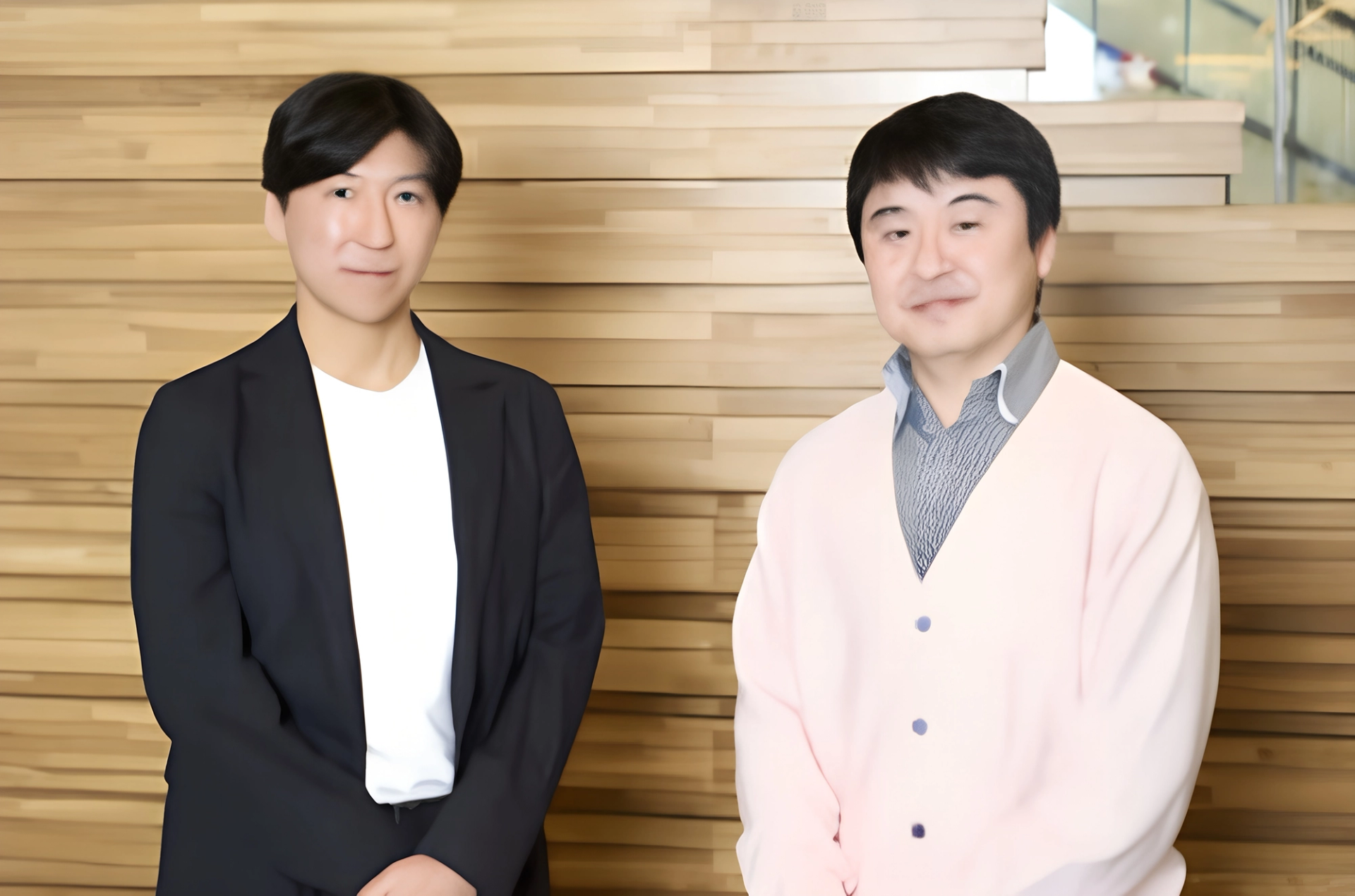


DENSO WAVE Inc., Business Development Office | Engagement Interview
Since 2022, enableX (formerly Strategy Campus) has supported DENSO WAVE's Business Development Office, with a primary focus on new business creation.
DENSO WAVE delivers innovative solutions across a wide range of fields, drawing on its industrial-robotics and auto-ID technologies, expertise, and frontline manufacturing experience.
While the company has long been known for its strength in technology development, it has placed particular emphasis in recent years on capturing market needs precisely and creating new business opportunities. As part of this, the Business Development Office was established and has been advancing new business creation by mobilizing internal and external resources.
Initially, the office pursued new businesses through a technology lens, leveraging internal resources. As the scope expanded to market-driven business development across a broader set of domains, the office recognized the importance of partnering externally and bringing in a market perspective — and engaged us for support.
We do not stop at providing frameworks; our strength is in support that is grounded in execution. In this interview, we explore in depth how the Business Development Office leverages our support, how it is creating new businesses, and the lessons and outcomes that have emerged along the way.
In new business development, taking action and iterating through trial and error are the keys to success. In this article, we go deep into the challenges the Business Development Office has faced, the insights gained through working together, and the practical process of business development.

How the Business Development Office at DENSO WAVE Approaches New Business Creation
— Thank you very much for joining us today.
DENSO WAVE delivers innovative solutions by drawing on its industrial-robotics and auto-ID technologies, expertise, and frontline manufacturing experience.
In recent years in particular, you have stepped up new business creation, and have engaged us in that work.
We have very much been looking forward to this conversation.
Thank you. The pleasure is mine.
— To begin with, when did you start in earnest with stand-up of new businesses?
The Business Development Office I belong to was launched in 2012, and we began to challenge ourselves to create innovation rooted in the company's core technologies.
Around 2018, we strengthened our BizDev function and shifted toward a market-driven and customer-driven orientation. Initially the focus was on technology exploration; over time, it evolved into an issue-driven approach.
— How do you define the industries and domains in which the Business Development office pursues new businesses?
From the founding of the office, we have not been bound by industry or domain — we target the full landscape.
Most recently, we have been closely watching the energy management, infrastructure, and security domains.
When I joined in 2020, the team had around five members. We held an off-site to clarify the Business Development Office's MVV (Mission, Vision, Values), and we operate under the mission: "Look beyond existing structures — across internal and external resources — to identify new problems worth solving."
— I see. You are currently engaging us today, but could you share the background to working with external firms?
Because DENSO WAVE is a company anchored in technology, new business ideas generated solely in-house tended to lean toward a technology perspective — making it difficult to gain fresh vantage points.
We also began to feel that ideas were running dry within a fixed set of members.
That is when we recognized the need to deepen partnerships externally and bring in new ways of thinking.
In fact, by advancing open innovation and connecting with external networks, we have genuinely been able to bring in new perspectives.
— Especially for manufacturers, new business ideation tends to start from technology or products.
When pursuing "0-to-1" new businesses, you need a team to scout new domains, and the question of whether to build that capability in-house or outsource becomes a key point of debate. Without prior know-how, doing it entirely in-house from the start is difficult.
And "outsourcing" is not only external commissioning — it also includes minority investments in start-ups.
My recommended approach is to do both — in-house and outsourcing — in parallel.
When you outsource, without some level of internal know-how, you cannot tell how best to use a consultant, nor identify the right investment targets.
That resonates strongly.
We too started in-house only, and at the beginning we did not know what we did not know.
At the same time, working on new businesses from within the Business Development Office has given us insights we could not have gained otherwise.
And if everything is outsourced, no knowledge accumulates internally — and you end up in an unhealthy form of dependence on external firms.
— Indeed. So, what has stood out to you most in your engagement with enableX (formerly Strategy Campus)?
What stands out is that you do not provide consulting that simply applies frameworks. You place real weight on "fundamental ways of thinking about the business" and on "action grounded in execution."
Frameworks have their value — they reduce dependence on individual experience and secure a degree of repeatability — but on the operating frontline, action is what matters most.
If strategies and plans built on frameworks are not accompanied by action, those strategies and plans hold no meaning.
In that sense, enableX (formerly Strategy Campus) is a consulting firm that places real weight on delivering results in execution, and we genuinely feel we have been able to move forward thanks to your support.
— Our own emphasis is on whether we can deliver results in execution, so we are grateful to hear that.
And as a broader market trend, there is an atmosphere in which frameworks alone seem to take on a life of their own.
I came from a consulting firm into an operating company, and I felt firsthand how important "action" is on the operating side — which has led to the consulting style enableX (formerly Strategy Campus) embodies today.
Frameworks themselves are very easy to understand and convenient for internal and external explanation, but when you become bound to them, you risk falling into "framework syndrome."
— Many people do fall into "framework syndrome."
One factor, I suspect, is that many people are chasing "the right answer."
Frameworks make it easy for everyone to follow along and arrive at something that feels like "the right answer."
Exactly.
Even in my own work on new businesses, there was a time when I started with frameworks, picked up the essence, and felt satisfied.
And on the search for "the right answer" — as you mentioned, many people want a clear answer and reach for frameworks, but tend to discover that the substance is missing once they try to put it into practice.

How to Engage Consulting Firms
— How did the Business Development Office gather information internally as you advanced new businesses?
We run an initiative called the "Street-Level Discovery Report." Members go out into the streets, report what they notice, and share perspectives that previously had not entered our thinking across the office.
We also conduct interviews with leaders in industries we are exploring for new business opportunities, in order to gain a real, grounded sense of the market and its insights.
Beyond that — and this is purely an analytical exercise — we ask questions such as "If △△ disappeared from the XX industry, how would businesses be affected?" or "If we map a particular industry's supply chain from upstream to downstream, where could DENSO WAVE meaningfully enter?"
— I see. You have been pursuing a wide range of initiatives.
Interviews with experts in each industry yield highly fresh, high-resolution information — very valuable.
How did you identify your interviewees?
We worked through acquaintances, leveraging personal connections to arrange interviews.
— Going through introductions is highly effective for interviews.
When you approach someone cold for an interview, it is rarely accepted.
How did you go about searching for a consulting firm like ours?
The channel through which we searched for consulting firms was webinars.
We were looking to engage a consulting firm as a hands-on partner for business creation.
Through webinars, we spoke with several consulting firms, including well-known major firms and design firms.
Until we began working with enableX (formerly Strategy Campus), we had been working with a consulting firm strong in design thinking.
The design firm's support was very useful for learning the "template" of how to formulate new businesses.
Having gained that foundational learning, we then sought more execution-grounded, hands-on support — and that is when we engaged you.
Thanks to that practical support, the "template" we learned has come to life — and I feel our new businesses themselves have moved up a stage.
— Thank you.
What do you expect from hands-on support by a consulting firm?
It depends on the stage and status of the client. What the Business Development Office sought at that time was the "sharpness rooted in frontline sense" needed to break through real business issues.
Your team brings substantial expertise and execution experience, has a frontline sense as a matter of course, and has networks across a wide range of industries — and you deliver that "sharpness of frontline sense" to us.
— Beyond analysis and logic, "frontline sense" is essential to moving a business forward.
Yes. Many consulting firms' hands-on engagements feel as though they are anchored in the "elegance of the output."
By contrast, enableX (formerly Strategy Campus) brings that elegance, but also the "force of will" and "determined push" that come only from understanding the frontline. Your support fits the frontline naturally and is reflected in the actual numbers.
The speed to output is also fast, and we are genuinely grateful that work on the frontline keeps moving smoothly.
— When standing up a business, what is typically required is not "elegance" but "force of will" and "speed."
Exactly. There is much in business that logic alone cannot move.
And from your team, we have also learned the importance of "insight" alongside "force of will."
Plenty of new business ideas come up, but when judging whether they can actually scale, I have felt acutely that "insight" is what you can rely on.
— "Insight" is critical. There are countless plausible ideas for new businesses, but you cannot research them all.
So drawing "insight" from prior knowledge and using it to narrow down options is essential.
Defining a domain with initial insight, running light desk research to form a business hypothesis, and then interviewing those deeply familiar with the domain — that approach, which puts execution and action above desk research, felt very right to me.
— Those actually working in the target domain typically have the right intuition, so we believe that — rather than agonizing over desk research — speaking to insiders earlier on is the more efficient path forward.

Do Large Enterprises Need "0-to-1" New Businesses?
— I see new businesses as falling into two types — "0-to-1" and "1-to-100."
In the Business Development Office's work on new businesses, how do you see the difference in how you advance "0-to-1" versus "1-to-100"?
A "1-to-100" new business can be seen as an extension of existing businesses and can leverage a meaningful share of internal resources.
By contrast, in "0-to-1" you can hardly use internal resources at all — you must rely on the Business Development Office team and external resources, and it is often harder to advance compared with "1-to-100."
One way of thinking — taking into account a company's own resources and external network — is that companies of a certain scale may also choose not to pursue "0-to-1."
— I see. I too have thought about whether large enterprises should pursue "0-to-1" or step back from it.
My current view is that they should pursue it.
Pursuing "0-to-1" naturally broadens the possible business domain, but more than that — even when extending existing businesses into adjacent domains, the motion required is the same as "0-to-1." Companies fluent in "0-to-1" can enter such adjacencies more skillfully.
— In new businesses, you sometimes move forward with partner companies. How do you think about partners?
Partner companies are extremely important in advancing new businesses. enableX (formerly Strategy Campus) has strong connections across many industries and has enabled us to realize multiple collaborations and business discussions that we could not have arranged on our own.
For example, in shaping a new business in the entertainment domain, you introduced us to a major entertainment group, which serves as a partner while also bringing the customer's perspective — a tremendous help.
In shaping a new business, customer reaction is the single most important input. Next in importance, we believe, is the kind of customer-partner company you introduced to us.
— Strong connections across a wide range of industries are one of enableX's (formerly Strategy Campus's) strengths.
In practice, support from a partner who is also in the customer position carries significant weight in moving a business forward.
Yes. As with this entertainment company — if the Business Development Office had approached them cold, they likely would not have engaged with us.
Because your team set out both the entertainment company and the Business Development Office's business concept, the entertainment company was willing to engage — and we hope to continue this pattern going forward.
— To get a partner company to turn toward you, a compelling business concept is essential.

Internal Persuasion and Product-Led Track-Record Building
— When committing resources to a new business, is there anything you are careful about in internal communication?
We place real weight on delivering a result for a new business — even just one yen.
When you have a real track record, your actions are preserved as objective facts, which makes internal persuasion much easier.
"We predicted this — and what actually happened was this" is a hundred times more powerful than "I think it will go this way."
— Track record matters greatly for internal communication.
Other clients often ask us how to handle internal persuasion. Looking across the success stories I have seen, what is common is that "the power of numbers" and "whether the speaker holds authority" must combine — those two together are essential.
The position of the person speaking and the trust they have built over time translate directly into how convinced the audience is.
In addition to what you mentioned, I would add that actually building a product and showing it is also important.
— Product matters as well.
With limited resources, it is difficult to build a fully polished product. Is there anything you are mindful of?
We have many people inside the company who are strong in product development, so we often consult the right expert in each area for each product.
— Leveraging internal resources that can also benefit new businesses is essential.
Having allies inside the company changes the way you advance a new business significantly.
— Building good relationships so that you can draw on support from colleagues is important.
Internal relationships and networks are areas an external firm like a consulting firm cannot easily build or improve on your behalf.
— Thank you for your time today and for this valuable interview!
We look forward to DENSO WAVE's continued growth and success.
About DENSO WAVE Inc.
DENSO WAVE delivers products that help raise productivity in industry across four business areas: the AUTO-ID business (development, design, and sales of barcode/QR-code readers and RFID readers), the robotics business (development, design, and sales of compact industrial robots), the control-equipment business (development of security controllers and programmable controllers), and the IoT solutions business (providing IoT for manufacturing frontlines).
Company name: DENSO WAVE Inc.
Address: 1 Yoshiike, Kusagi, Agui-cho, Chita-gun, Aichi
Representative: Takayoshi Sagara, Representative Director
Founded: June 1976
Corporate website URL: https://www.denso-wave.com/