[Employee Interview: Executive Officer] The Thrill of Building a Business from Zero — Mr. Kuramoto on His Challenge at enableX
![[Employee Interview: Executive Officer] The Thrill of Building a Business from Zero — Mr. Kuramoto on His Challenge at enableX](https://cdn.sanity.io/images/as1n7ca4/production/8a4ff9b08b5802061da20759999fe3a251f0ae53-1125x1400.png?w=1920&q=85&fit=max&auto=format)
After a career spanning a leading education company, a boutique firm, and the founding and sale of his own business, Executive Officer Kuramoto joined enableX in its early days. Drawing on his work in business development and marketing, he discusses the thrill of building a business from zero.


[Employee Interview: Executive Officer] The Thrill of Building a Business from Zero — Mr. Kuramoto on His Challenge at enableX
After founding his own company, he joined enableX from its inception — what is the thrill of building a business here?
2025.06.25
Current Position and Career Background
Mr. Kuramoto currently serves as an Executive Officer at enableX. After joining a leading education company straight out of university, he gained experience in marketing and consulting for educational institutions. He then moved to a boutique firm, founded a marketing services company with a friend, and after selling that business, he reached his current role.
At enableX, his primary domains are business development and marketing, and he takes on a wide range of roles — including project PM, account expansion with existing clients, and new client acquisition.
Kuramoto: My mission is to drive and lead the company's broader contribution to society. I'm also currently working on the development of offerings that leverage AI agent technology.
How He Encountered enableX and Why He Joined
Mr. Kuramoto first encountered enableX through a referral from the company's CEO. Looking back, he describes the deciding factor as "the chance to cultivate customers and shape the company from absolute zero."
Kuramoto: I joined at enableX's launch phase, and being able to engage from the very moment we were building the company from zero was the deciding factor. At the previous boutique firm, I hadn't joined from the launch phase — so being able to build the company myself from an even earlier stage felt deeply rewarding. Taking the long view, I believe this kind of experience will prove invaluable to my career.
While he had previously founded a business with a friend using their own capital, doing so "as a subsidiary of a listed company" was a first for him — another reason he chose a company at this stage.
Post-Onboarding Gaps and Strong Internal Collaboration
After joining, what struck him most — in a positive sense — was how easy it was to collaborate with members of group companies.
Kuramoto: Even when cultivating our initial customers, the group companies generously introduced us to companies they had existing relationships with, and willingly joined us on visits to engage prospects together. Meeting opportunities and gatherings with the heads of each business unit were arranged right after I joined, so we could communicate immediately — and that turned out to be a much better gap from my expectations than I had anticipated.
Scope of Autonomy and Speed of Decision-Making
On scope of autonomy and decision-making speed, he notes: "Compared with the large company I joined first, the level of autonomy here is considerably wider and decisions move much faster."
Kuramoto: In my case, I'm expected to create new work and grow the company. I don't need to worry about stepping on pre-existing policies; instead, I'm expected to design what becomes the policy myself, shape it, and then hand it off to other members in a structured form. In that sense, I can engage without being constrained by the boundaries of my mandate.
On decision-making as well, once I align with the CEO, things move forward immediately. I've never once been blocked on anything that's good for the business — so I can work without barriers to the pace I want to set.
Relationships with Members and Internal Communication
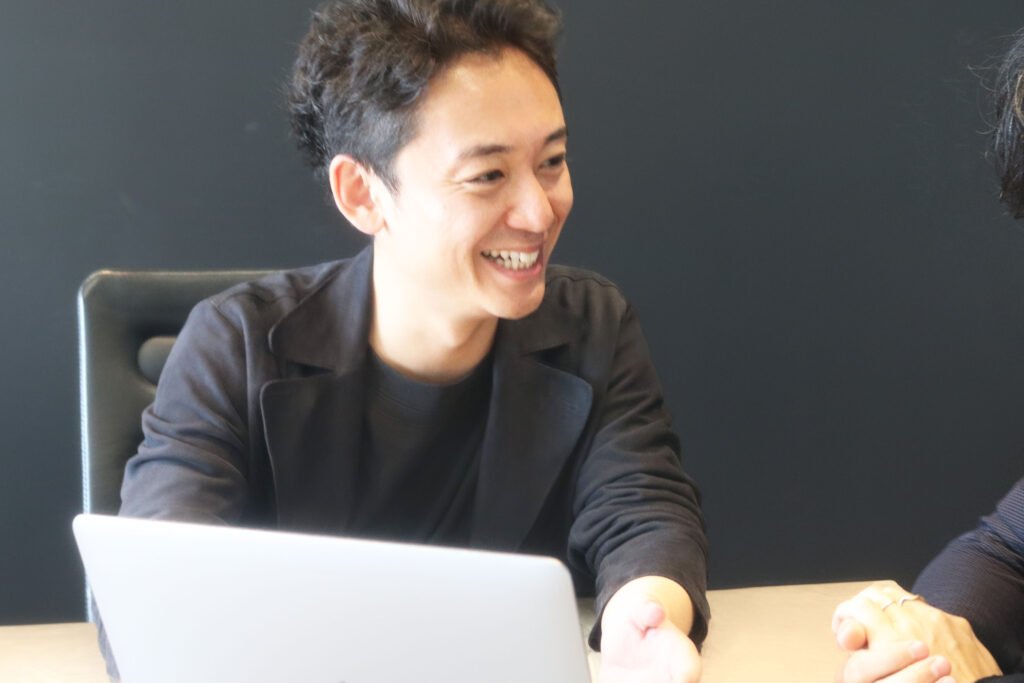
Mr. Kuramoto describes the "openness" as a distinctive feature. He particularly emphasizes how easy it is to collaborate with the CEOs and heads of group companies.
Kuramoto: Even the founders of the group respond quickly to a DM, and if you ask for time to discuss something, they make time for you immediately. The heads of each group company often join those discussions as well — so I find collaboration genuinely easy.
On internal communication, he believes "a culture of mutual cooperation to drive things forward has taken root." In particular, in fields involving cutting-edge technologies such as AI agents, where past experience alone often isn't enough, he says he feels a strong sense of "organizational efficacy" — collaborating with members who bring varied experience and those who are actively learning, and supporting one another.
Current Challenges and the Thrill of the Work
The thrill of his current work, he says, is "being able to drive the company's strengths and evolution by initiating things yourself."
Kuramoto: What I find difficult yet fascinating is codifying each person's strengths so that other members can replicate them. For example, if someone is exceptionally good at opening an account at a major enterprise with no prior relationship and landing the first project, the challenge is enabling other members to replicate that rare capability. Without that, the organization's collective strength won't rise — so I spend a lot of time thinking about how to build it.
The Feeling of Building a Business
Mr. Kuramoto recalls that, in the early days of the company, he engaged with a strong sense of urgency around "how to generate the first revenue." The very process of building the pace at which revenue could be generated, he says, was "the very moment of building a business."
Kuramoto: Recently, with revenue now established to a degree and the customer base growing, we're shifting into a phase of "building and accumulating strengths as a company."
To build those strengths, we look not only at internal members but also at how our customers and the world will evolve in the coming years. Once the direction of our strengths is set, we consider whether we can build them in-house or whether external collaboration is needed. When I'm cultivating those partnership opportunities, I really feel I'm taking the actions essential to building a business.
Walls He's Overcome
The biggest wall, he reflects, was "winning work in unfamiliar territory." By way of example, he shared an episode about landing a business-creation project leveraging the Digital Product Passport (DPP), as well as a business-creation engagement in the blockchain domain.
Kuramoto: Working in a domain I wasn't an expert in, I had to win the trust of a customer deeply versed in that field and carry it through to a signed engagement. On top of that, having to advance through to contract with a major enterprise that wasn't yet a customer — through my own effort — felt like a real wall. I worked through it precisely because I refused to confine myself to what I could do alone, securing cooperation from people both inside and outside the company. Through that, I built the ability to form a body of collective knowledge as I work.
How He Draws on Past Experience
His diverse past experiences, he says, are deeply alive in his current work.
Kuramoto: On the delivery side, my marketing experience at the first education company provided a foundation, and continuing marketing support work at subsequent companies became a real strength.
On business creation, he feels "the experience of building a business from zero with a friend has become a real weapon when supporting our customers' own business creation." On the sales side, his experience with educational institutions and government clients at the education company, and as a major account manager at the boutique firm, translates directly to his current sales activities.
Future Career and Positioning
While he prefaces by noting he hasn't yet pictured the next step in detail, he adds that "there's a possibility a theme or domain I feel compelled by may emerge." In the past, he has also launched a business out of his interest in running and health.
Kuramoto: Fundamentally, I have a strong desire to keep pushing forward in the work I'm doing now. But if, somewhere down the line, a strong impulse to do something new emerges, I think the experience I'm gaining today will be enormously helpful.
A Message to Future Colleagues
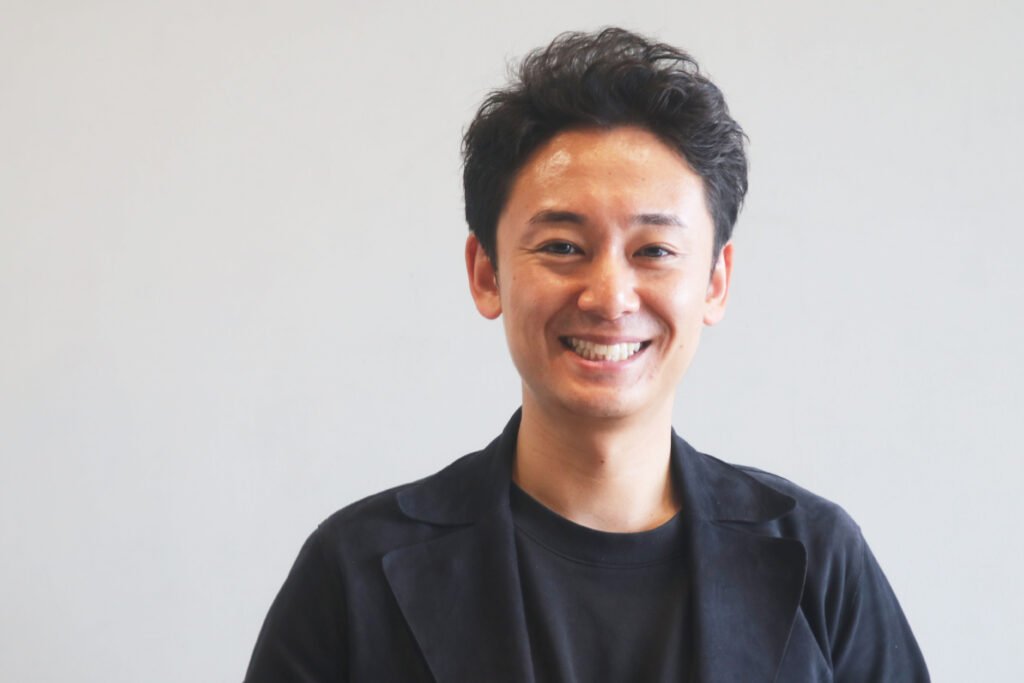
Finally, asked what kind of colleagues he wants to work with, he responds: "Someone with ambition who pours that passion into their work and can share and collaborate that energy with the people around them."
Kuramoto: It would be reassuring to have someone who can clearly convey their own intensity to others and collaborate skillfully. If anyone reads this and thinks even a little that they'd like to take something on at our company — or that they might be able to — I'd love them to apply and join a session to speak with our members directly.
As a message to those considering a career change, he says: "I'd really want them to think carefully — do they want to go somewhere they can reliably perform based on what they've already built, or do they want to go somewhere they can experiment and take on challenges?"
Kuramoto: When I approach work, I think it's good to spend roughly half of your time on domains where past experience lets you deliver stable results, and the other half taking on challenges in "domains where success is uncertain and there's real anxiety." That's the balance I aim for.
It's natural to feel anxious in uncertain territory — but at our company, we move forward by cooperating with each other. enableX is still very much a young company, but it's an environment where you can take on challenges through trial and error. For those interested, I'd be delighted if you jumped in.